Review·ecommerce stack·Updated June 2026·6 min read
Shopify 2026: The Platform That Survived Its Own Success
We took a close look at Shopify's 2026 platform — the biggest changes since its IPO. The pricing restructure hit hard, but new AI tools and improved Plus features make the math more complex than the headlines suggest.
Shopify entered 2026 as the undisputed ecommerce platform king, powering over 5 million stores globally. But success bred complacency — and aggressive pricing moves that left many merchants scrambling.
The January 2026 pricing overhaul eliminated the $29 Basic plan, pushed transaction fees higher on lower tiers, and introduced AI Credits as a separate line item. Merchants revolted, competitors gained ground, and Shopify's stock took a beating.
We've run our own store, feeltheline.com, on Shopify through the 2026 changes and dug into the updated platform across store sizes. The reality is more nuanced than the angry merchant forums suggest.
Here's what actually changed, what it costs now, and whether Shopify remains the default choice for serious ecommerce operations.
What works
AI product descriptions actually work well for most catalog use cases
Shopify Plus automation builder eliminates need for most Zapier workflows
New headless commerce tools compete directly with custom builds
App ecosystem remains unmatched with 8,000+ certified integrations
Payment processing improved with lower international fees
What doesn’t
Basic plan elimination forces $79/month minimum spend
AI Credits pricing structure adds $45-200/month for active users
Transaction fees increased 0.1% across Standard and Advanced tiers
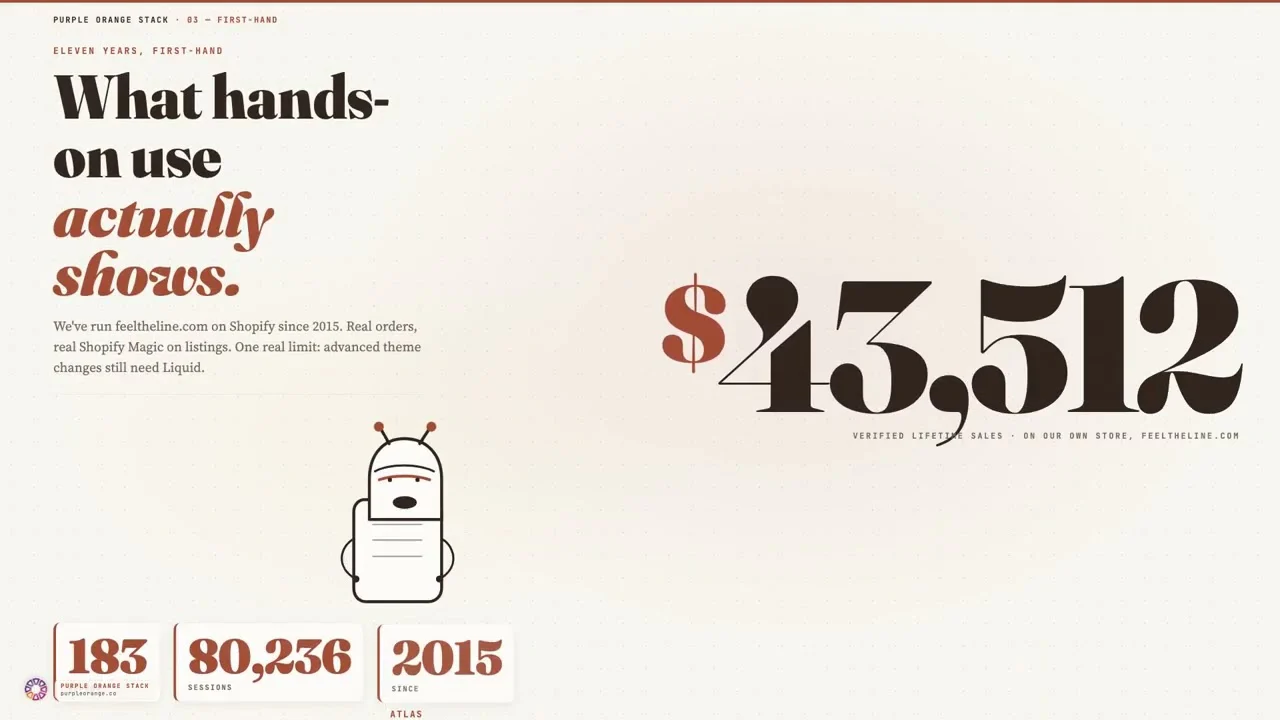
Theme customization still requires Liquid knowledge for advanced changes
Advertisement
Pricing Reality Check
The 2026 pricing restructure eliminated confusion but increased costs. The new structure: Starter ($5/month), Standard ($79/month), Advanced ($399/month), and Plus (starts at $2,300/month). Transaction fees now range from 2.9% + 30¢ on Starter to 2.4% + 30¢ on Advanced.
For a store doing $10K monthly revenue, total platform costs jumped from $105/month to $158/month including AI Credits. That's a 50% increase, but you get AI product descriptions, automated email flows, and advanced analytics that previously required paid apps.
We've run our own store, feeltheline.com, on Shopify since 2015 — roughly $43.5K in sales across 183 orders over those eleven years — and we're grandfathered on a legacy $30/month plan, so the 2026 hikes don't touch our own bill. That longevity is exactly why we can tell you what actually changed for everyone signing up today. For new merchants the base cost is higher, but folding analytics, email flows, and other capabilities into the plan claws back much of what used to go to paid apps, so the net change is smaller than the headline price suggests.
AI Features That Actually Matter
Shopify's AI rollout focused on three areas: product content generation, inventory forecasting, and customer service automation. The content generator handles 80% of product descriptions adequately — a huge time saver for catalog-heavy brands.
AI inventory predictions help with standard catalog items, though they struggle with seasonal items and new product launches. The customer service bot handles basic inquiries well but still requires human handoff for complex issues.
The standout feature is AI-powered email automation that personalizes based on browsing behavior and purchase history — the kind of flow that used to mean running a separate Klaviyo setup.
The newest shift is agentic commerce. Our own admin now reports that AI agents — ChatGPT, Microsoft Copilot, and Shop — have started sending real shoppers to feeltheline.com, a channel that didn't exist a year ago. It's early and the volume is small, but it's a genuine new source of traffic Shopify surfaces and lets you manage directly.
Plus Platform Improvements
Shopify Plus received the most significant updates, including advanced workflow automation, better B2B functionality, and improved international selling tools. The new automation builder rivals dedicated platforms like Zapier for ecommerce-specific workflows.
B2B features now include proper wholesale pricing, customer-specific catalogs, and bulk ordering interfaces. The B2B tooling now covers cases that used to require custom development.
International expansion tools improved dramatically with automatic tax calculations for 150+ countries and native multi-currency support. Cross-border selling complexity dropped significantly, though you'll still need apps for advanced localization.
App Ecosystem and Integrations
Shopify's app store expanded to over 8,000 certified apps in 2026, with improved vetting that reduced the low-quality noise. Key categories saw major improvements: SMS marketing, loyalty programs, and subscription management.
Notable app launches include native TikTok Shop integration, improved Amazon channel sync, and better wholesale portal options. The app review process now requires actual merchant testing, which eliminated many broken or abandoned apps.
Integration quality varies widely. Tier-1 apps like Klaviyo, Gorgias, and Recharge maintain excellent Shopify sync. Smaller apps often lag on API updates, causing temporary breakdowns during platform updates.
Performance and Reliability
Shopify's performance story is still one of its strongest arguments for small merchants. The platform handles image optimization, CDN delivery, SSL, checkout hosting, and infrastructure maintenance without asking the store owner to tune servers or babysit plugins.
That matters most during promotions and traffic spikes. A hosted checkout and managed CDN reduce the operational risk that comes with self-hosted ecommerce, especially for owners without an in-house developer.
The tradeoff is control. A custom or heavily optimized WooCommerce build can be tuned more deeply, but the maintenance burden moves back onto the merchant or agency. Shopify is less flexible, but much harder to break.
Competition and Alternatives
WooCommerce remains the obvious alternative for merchants who want WordPress control and are willing to own hosting, plugin updates, and security. BigCommerce is stronger for teams that want hosted commerce without Shopify's app ecosystem.
Headless solutions like Medusa and CommerceJS appeal to developer-focused teams, though deployment complexity remains high. Shopify's Hydrogen framework bridges part of that gap by offering headless flexibility while keeping Shopify's checkout and admin layer.
For most small merchants, alternatives increase technical overhead before they create meaningful savings. Larger brands with dedicated engineering resources should evaluate custom or enterprise options, but Shopify remains competitive when operational cost is included.
Research desk · verified pricingCaptured June 2026
Shopify's 2026 pricing increase hurts, but the platform improvements can justify the higher cost for merchants who value lower maintenance burden over maximum control. AI content tools, hosted checkout, managed infrastructure, and stronger Plus automation reduce the number of separate systems a store owner has to manage.
We still recommend Shopify for most small-business stores. The exceptions: ultra-price-sensitive startups (consider WooCommerce), enterprise brands needing deep B2B customization (evaluate custom builds), and developers who prioritize technical control over operational simplicity. For everyone else, Shopify remains the path of least resistance to a durable ecommerce operation.
Answered by The Editor, with notes from Atlas and Roxy.
Is Shopify worth it in 2026 with the new pricing?
Yes, for most merchants. The price increases are offset by AI features and automation that eliminate paid apps and manual work. We're grandfathered on a legacy plan ourselves, so the hikes don't hit our bill — but even for new merchants, the higher base cost is largely offset by what's now bundled in.
What happened to the $29 Basic plan?
Shopify eliminated the Basic plan in January 2026, making Standard ($79/month) the entry-level option for full online stores. The new Starter plan ($5/month) only supports social selling and in-person sales, not standalone websites.
Are Shopify's AI features actually useful or just marketing?
Mixed results. The product description generator works well for standard catalog items but struggles with technical or unique products. AI inventory forecasting is genuinely useful for standard catalog items but less reliable for seasonal or brand-new SKUs.
Should I migrate from Shopify to WooCommerce because of pricing?
Only if you're comfortable with higher technical overhead and have development resources. WooCommerce's total cost of ownership often matches Shopify when you factor in hosting, security, maintenance, and plugin costs. Most merchants save time and money staying on Shopify.
How do the new transaction fees compare to competitors?
Shopify's 2.4-2.9% + 30¢ fees are competitive with BigCommerce and Square. PayPal charges similar rates but lacks integrated inventory and marketing tools. The key advantage is avoiding separate payment processor contracts and technical integrations.
Is Shopify Plus worth $2,300+ per month?
For larger brands with wholesale, multi-store, or advanced automation needs, yes. The B2B tools, workflow automation, and priority support can justify the cost. Smaller merchants usually get enough functionality from the standard Shopify plans unless they need specific wholesale or multi-store capabilities.
Analytics run in a privacy-safe, cookieless mode by default. Accept to enable
full analytics and personalized ads, which helps keep this research free. See our Privacy Policy.