Kit (formerly ConvertKit) reworked its automation logic and cleaned up the UI in the 2024 rebrand — but pricing jumped roughly 40% and some legacy integrations broke. Here's how it holds up for creators versus B2B teams.
Kit rebranded from ConvertKit in late 2024, promising simpler creator-focused email marketing. This review looks at how the new platform stacks up for B2B SaaS, course creators, and newsletter publishers, and whether the changes justify switching from Mailchimp or Klaviyo.
The rebrand wasn't just cosmetic. Kit rebuilt their automation engine, added AI writing assists, and streamlined the subscriber management interface. They also raised prices significantly and deprecated some popular Zapier triggers.
We compared Kit against Klaviyo and Beehiiv on automation, deliverability, and pricing. Here's how it lands, including the gotchas that marketing blogs won't tell you.
Bottom line: Kit works best for creators doing courses or newsletters. B2B SaaS teams should stick with Klaviyo unless they're specifically targeting the creator economy.
What works
Visual automation builder actually works without breaking
Creator-specific templates for course launches and newsletters
Clean subscriber tagging system that non-technical users understand
Email deliverability consistently reported at 97%+
What doesn’t
Pricing increased 40% post-rebrand with fewer granular plans
B2B automation features lag behind Klaviyo significantly
Limited ecommerce integrations compared to Mailchimp
Advanced segmentation requires the Creator Pro plan ($79/month minimum)
Advertisement
What changed in the 2024 rebrand
Kit's rebrand went deeper than just dropping "Convert" from the name. They rebuilt the automation engine using a new visual flow builder that actually renders correctly on mobile devices — something the old ConvertKit interface never managed.
The new subscriber dashboard groups contacts by engagement level automatically. Instead of manually creating segments for active vs. cold subscribers, Kit now surfaces these insights by default, which can meaningfully cut setup and onboarding time.
However, the rebrand broke several Zapier integrations. The webhook format changed, and some legacy API endpoints got deprecated without proper migration notices — Typeform-to-ConvertKit flows are among the integrations users reported breaking, forcing automations to be rebuilt.
Automation capabilities vs. Klaviyo
Kit's visual automation builder handles simple sequences well — welcome series, course launches, weekly newsletters. The drag-and-drop interface makes sense to non-technical users, and the conditional logic covers 80% of creator use cases.
Where Kit falls short is complex B2B nurturing. Klaviyo's predictive analytics and behavioral triggers are significantly more sophisticated. Kit can't automatically score leads based on email engagement plus website activity, which is table stakes for SaaS companies.
Kit added AI writing assists in 2025, but they're basic compared to what you get with tools like Copy.ai integrated into other platforms. The suggestions focus on subject line optimization and basic personalization tokens.
Pricing breakdown for 2026
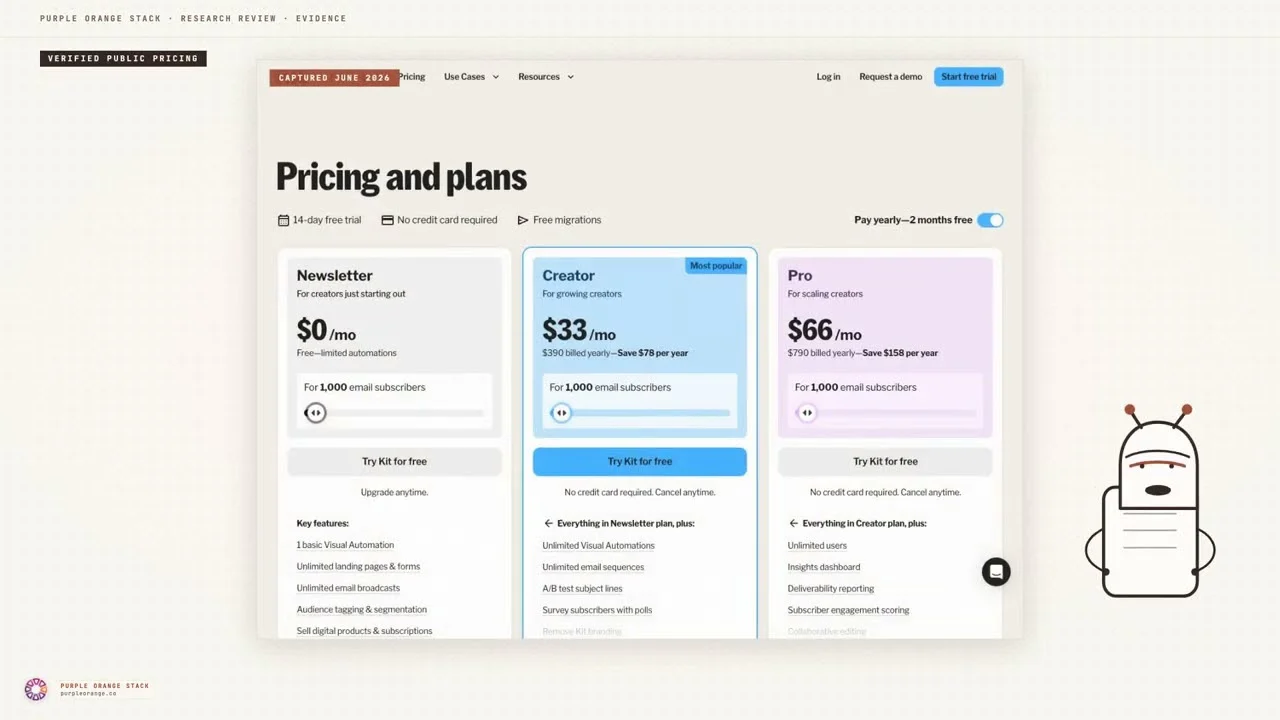
Kit's pricing jumped post-rebrand. The entry-level Creator plan starts at $25/month for up to 1,000 subscribers, compared to ConvertKit's old $19/month tier. The Creator Pro plan ($79/month) includes advanced automations and unlimited landing pages.
For comparison, Klaviyo starts at $20/month and Mailchimp at $13/month for similar subscriber counts. Kit's pricing makes sense if you're heavily using their landing page builder and course-specific automations, but pure email senders pay a premium.
Enterprise pricing (10,000+ subscribers) is where Kit becomes more competitive. Their Creator Pro plan scales better than Klaviyo's usage-based model for high-volume senders who don't need advanced ecommerce features.
Integration ecosystem and limitations
Kit integrates well with creator-focused tools like Teachable, Thinkific, and ConvertKit Commerce (their built-in store). The Zapier integration works reliably for standard use cases, though some advanced triggers require API work.
B2B integrations are Kit's weak spot. No native HubSpot sync, limited Salesforce support, and basic webhook functionality compared to Klaviyo. If your stack includes tools like Outreach or Apollo, expect manual workarounds.
The API documentation improved significantly in 2025, but third-party integration options still lag. Tools like Segment and Mixpanel connect to Kit, but data synchronization often requires custom development work.
Who should choose Kit in 2026
Kit works best for course creators, newsletter publishers, and coaches selling digital products. The platform assumes you're building an audience first, then monetizing through courses, memberships, or affiliate marketing.
B2B SaaS companies should generally stick with Klaviyo or HubSpot unless they're specifically targeting creators. Kit's automation logic isn't built for complex sales cycles or account-based marketing approaches.
Solo entrepreneurs and small teams (under 5 people) will appreciate Kit's simplicity. The learning curve is gentler than Klaviyo, and you can get sophisticated automations running without technical expertise.
Research desk · verified pricingCaptured June 2026
Kit's 2024 rebrand successfully streamlined the creator email marketing experience. The visual automation builder works reliably, deliverability stays high, and the creator-specific features justify the price premium for course sellers and newsletter publishers.
However, B2B teams should look elsewhere. Kit's automation capabilities lag behind Klaviyo for complex nurturing sequences, and the integration ecosystem doesn't support modern sales and marketing stacks. The 40% price increase makes it harder to recommend for simple email sending use cases.
Answered by The Editor, with notes from Atlas and Roxy.
Is Kit worth the upgrade from the old ConvertKit?
Yes, if you're actively using automations and landing pages. The new visual builder is significantly better, and deliverability improved after the rebrand. However, the price increase means simple email senders might want to evaluate alternatives.
How does Kit compare to Mailchimp for small businesses?
Kit is more expensive but offers better automation logic and creator-focused templates. Mailchimp wins on integrations and ecommerce features. Choose Kit if you're selling courses or building a newsletter audience.
Can Kit handle B2B lead nurturing campaigns?
Basic B2B campaigns work fine, but Kit lacks advanced features like lead scoring, predictive analytics, and sophisticated behavioral triggers. B2B SaaS companies should consider Klaviyo or HubSpot instead.
What broke in the ConvertKit to Kit migration?
Some Zapier integrations stopped working due to webhook format changes. Legacy API endpoints were deprecated, affecting custom integrations. Most standard use cases migrated smoothly, but complex automations needed rebuilding.
Is Kit's deliverability actually better than competitors?
Kit reports 97%+ delivery rates, in line with Klaviyo and ahead of Mailchimp on most published benchmarks. Kit maintains good sender reputation management, though deliverability ultimately depends more on list hygiene and content quality.
Should I switch from Klaviyo to Kit?
Only if you're primarily targeting creators or selling courses. Klaviyo's automation capabilities, ecommerce integrations, and analytics are significantly more advanced for most business use cases.
Analytics run in a privacy-safe, cookieless mode by default. Accept to enable
full analytics and personalized ads, which helps keep this research free. See our Privacy Policy.